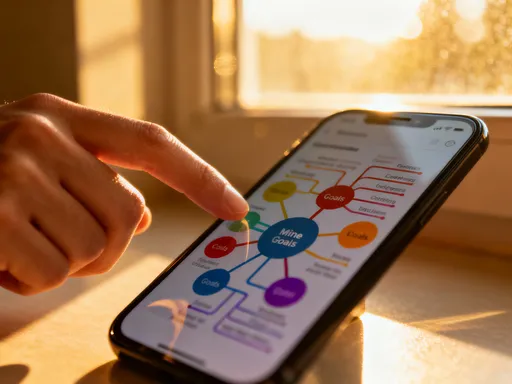
Tired of forgetting your own ideas? How smart notes give your life back
We’ve all been there—jotting down a brilliant thought on a napkin, only to lose it by lunchtime. Or staring at a messy notebook, wondering where that one idea went. It’s not just about disorganization; it’s about losing pieces of your potential. What if your notes could work *for* you, not against you? Let’s talk about how the right tools can turn chaos into clarity, and ideas into action. This isn’t about fancy tech or complicated systems. It’s about finding peace in the everyday, giving yourself the space to breathe, create, and grow—without the weight of forgotten promises to yourself.
The Moment It All Clicked: A Real-Life Story of Note Overload
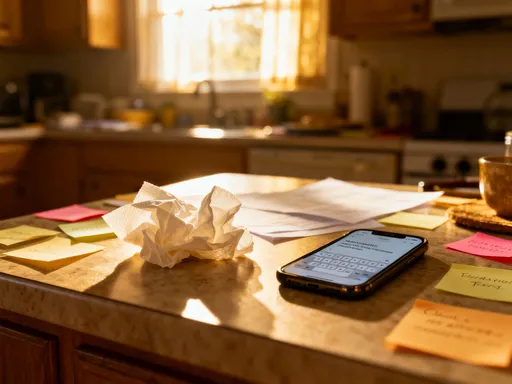
I remember standing in my kitchen one rainy Tuesday morning, coffee in hand, trying to write a simple to-do list. My phone buzzed with a reminder about a school event. My daughter called from upstairs asking where her soccer cleats were. My husband walked in, needing the grocery list I swore I’d finished yesterday. And there I was—pen in hand, staring at a half-written note on a sticky pad, mentally flipping through three different notebooks, two phone apps, and a voice memo I hadn’t listened to in days.
I wasn’t just overwhelmed. I felt like I was failing. Not because I didn’t care, but because I cared too much. I wanted to be on top of everything—family schedules, work deadlines, personal goals like learning to bake sourdough or finally starting that garden. But my tools weren’t helping. They were fighting me. Every idea, every task, every sweet little thought I had while folding laundry or driving to work—lost in a maze of disconnected scraps.
That moment wasn’t just about forgetting where I wrote down ‘buy compost.’ It was about losing momentum, confidence, and joy. I realized I wasn’t disorganized—I was unsupported. My system wasn’t built for a real life. It was built for a robot. And I’m not a robot. I’m a woman trying to hold it all together with love, intention, and too little time. That’s when I started asking: what if my notes could understand me? What if they could remember so I don’t have to?
Why Your Notes Should Know You Better Than You Know Yourself
Think about the last time you had a great idea. Maybe it was a new way to organize the pantry, a gift idea for your mom’s birthday, or a thought about a book you wanted to write. You grabbed your phone, opened the notes app, typed a few words, and moved on. Two weeks later, you couldn’t find it. Not because you didn’t save it—but because you saved it in the wrong place, with the wrong title, or buried under fifty other half-formed thoughts.
This isn’t a memory problem. It’s a system problem. When your notes are scattered—some on paper, some in apps, some in voice memos—they don’t just disappear. They take pieces of your confidence with them. You start to doubt yourself. You think, ‘Maybe I’m not that creative. Maybe I don’t have what it takes to follow through.’ But the truth? You do. You just need a system that keeps up with you.
Smart note tools aren’t about storing information. They’re about understanding it. The best ones learn from you. They notice that you often tag things ‘family’ when it’s about weekend plans. They recognize that voice memos recorded after 8 p.m. are usually about bedtime stories or parenting ideas. They let you search by mood, by date, by keyword—and they find what you’re looking for, even if you don’t remember exactly what you said.
Imagine this: you’re walking the dog, and a recipe idea pops into your head. You open your phone, speak into the microphone, and say, ‘Pasta with roasted tomatoes and basil—try for Friday dinner.’ Later, when you’re planning meals, you type ‘Friday dinner idea’ and there it is. Not buried. Not lost. Just waiting for you. That’s not magic. That’s technology designed for real life. It’s not about being perfect. It’s about being supported.
From Chaos to Calm: Building a System That Grows With You
You don’t need a complicated system. You need one that works when you’re tired, distracted, or running late. The key is simplicity. One place for everything. Easy capture. Automatic organization. And most importantly—access from anywhere. No more wondering if the list is on the fridge or in your phone. No more opening five apps to find one piece of information.
I started by choosing one tool—one digital notebook that could do it all. I picked one that let me type, speak, snap photos of handwritten notes, and even save web articles with a single click. I set it up to sync across my phone, tablet, and laptop. Then, I created a few simple categories: Family, Home, Work, Dreams. That’s it. No subfolders. No rules. Just gentle guidance.
My friend Lisa did something similar, but she focused on parenting. She used to lose track of her kids’ school projects, doctor visits, and favorite books. Now, she has one shared notebook with her partner. They add notes in real time—‘Emma’s science fair is March 14,’ ‘Ben loves the dinosaur book from the library,’ ‘Pediatrician appointment rescheduled to Thursday.’ They get alerts. They can search. And when one of them forgets, the other just checks the app. No blame. No stress. Just teamwork.
What’s beautiful is how the system grows with you. You don’t have to get it right the first time. You start messy. You learn. You adjust. The tool learns too. Over time, it starts to anticipate what you need. You begin to trust it. And when you trust your system, you free up mental space. You stop carrying the weight of remembering. And that’s when real growth begins.
Turning Ideas Into Action Without the Overwhelm
Here’s the thing about ideas: they’re fragile. A spark of inspiration can vanish in seconds if it’s not caught. But even if you catch it, what good is it if it just sits there? The magic of smart notes isn’t just in capturing ideas—it’s in helping you act on them.
Let me show you how. Last month, I was flipping through an old magazine and saw a photo of a beautiful layered salad. I loved it. I thought, ‘I should make this for the family.’ Instead of tearing out the page and losing it, I took a photo and saved it directly into my ‘Meals’ section. I tagged it ‘easy,’ ‘vegetarian,’ and ‘kids might like this.’ Then, I linked it to my weekly meal plan.
On Sunday night, when I opened my meal planner, there it was—automatically suggested for Wednesday. I clicked it, added the ingredients to my grocery list, and set a reminder to prep the veggies in the morning. That night, I made the salad. My kids ate it. My husband said, ‘This is restaurant-level good.’ And I didn’t feel stressed. I didn’t have to think hard. The system did the heavy lifting.
This is what smart notes do. They bridge the gap between ‘I wish I could’ and ‘I did.’ They turn intention into action with gentle nudges—reminders, links, checklists—not pressure. You’re not chasing your tail. You’re moving forward, one small step at a time. And each step builds confidence. Each completed task whispers, ‘You’ve got this.’
Family, Goals, and Quiet Wins: Notes That Support Real Life
Technology gets a bad rap sometimes. We hear, ‘Put down your phone and be present.’ And yes—being present matters. But what if your phone could help you be more present? What if it helped you remember the things that matter, so you could focus on the people in front of you?
My shared grocery list is a small thing. But it’s changed our home. No more, ‘Did you get the oat milk?’ No more standing in the store, texting back and forth. We both see the list. We check things off as we go. Sometimes, one of us adds a surprise—‘Pick up strawberries, they’re on sale’—and the other smiles when they see it. It’s not just efficient. It’s sweet. It’s connection.
Then there’s my ‘Milestones’ note. I started it when my youngest turned five. Every few weeks, I add a line: ‘Lila rode her bike without training wheels,’ ‘She wrote her name all by herself,’ ‘She told her first joke at dinner.’ I don’t do it perfectly. Sometimes I forget for months. But when I open it, I’m flooded with love. And when I share it with my mom, she cries. These aren’t just notes. They’re memories in the making.
And for myself? I have a ‘Becoming’ section. It’s where I track small goals—‘Walk 30 minutes three times a week,’ ‘Read one book a month,’ ‘Say no when I’m full.’ I don’t beat myself up if I miss a week. I just check in, adjust, keep going. The note reminds me gently. It doesn’t shame me. It supports me. These aren’t productivity wins. They’re quiet victories—the kind that build a life you love, one small choice at a time.
The Unexpected Gift: More Space for What Matters
The biggest change wasn’t in my to-do list. It was in my mind. Before, I carried everything—appointments, ideas, promises—like rocks in my pockets. I was always half-listening, half-remembering, half-present. Now, I trust my system. When something comes up, I save it and let it go. I don’t have to hold onto it.
That mental space? It’s priceless. I have more room to listen—to my kids, my husband, myself. I have more energy to create, to dream, to just *be*. I started journaling again—something I hadn’t done in years. Not because I had more time, but because I had less mental clutter. Writing feels easy now. It’s not a chore. It’s a gift.
I spoke with a woman named Karen who said something that stuck with me: ‘I used to think using a note app meant I was lazy. Now I realize it’s the opposite. It’s how I respect my time and my mind.’ She’s right. Ease isn’t laziness. It’s wisdom. It’s choosing tools that work with you, not against you. It’s letting go of the myth that doing it all in your head is a sign of strength.
When your tools disappear into the background, your life comes into focus. You stop managing information and start living. You remember why you wanted to remember in the first place—not to be perfect, but to be present. To honor your ideas. To show up for your family. To grow into the woman you’re becoming.
Making It Yours: Start Small, Think Deep
You don’t need to change everything today. In fact, don’t try. Start with one thing. One area of your life that feels messy or draining. Maybe it’s meal planning. Maybe it’s keeping track of your child’s activities. Maybe it’s your own dreams—those quiet hopes you scribble in the margins of your journal.
Pick one. Choose a tool that feels easy, not intimidating. Look for one that lets you capture ideas in your own way—typing, speaking, drawing. One that syncs across devices. One that doesn’t make you jump through hoops. Test it for a week. See how it feels. Does it lighten the load? Does it make you smile when you find something you thought was lost?
Remember, this isn’t about perfection. It’s about progress. Your system will evolve. You’ll delete notes. You’ll start over. That’s okay. What matters is that you’re showing up for yourself. You’re saying, ‘My thoughts matter. My time matters. I matter.’
And when you find that one note—the recipe your kids loved, the idea that turned into a reality, the milestone you almost forgot—you’ll feel it. That little spark of pride. That quiet joy. That’s not just a reminder. That’s your life, unfolding. One smart note at a time.