Tired of Forgetting Your Goals by Friday? This App Keeps Them Alive All Week
Life gets busy—goals get buried under emails, errands, and endless to-do lists. You start Monday with big dreams, but by Wednesday? Forgotten. What if the problem isn’t your willpower, but how you’re tracking your goals? I discovered a simple tool that changed everything: mind mapping apps. They don’t just organize thoughts—they keep your goals visible, connected, and alive. No more sticky notes lost in chaos. Just one glance and I’m back on track. Let me show you how this small shift made a lasting difference.
The Monday Motivation That Fades by Lunchtime
How many times have you started a week with real fire in your belly? You write down your goals with intention—drink more water, spend quality time with the kids, finally finish that online course. Maybe you even say it out loud: "This week is going to be different." And then—life. The school pickup runs late. The dog needs the vet. Your laptop crashes mid-project. By Tuesday afternoon, that beautifully written list is crumpled at the bottom of your bag, forgotten. I’ve been there, more times than I can count. And it’s not because we’re lazy or undisciplined. It’s because the way we’re trying to manage our goals doesn’t match how our lives actually unfold.
Think about it: we’re using tools built for a different era—notebooks, sticky notes, basic to-do apps—tools that assume we’ll follow a neat, linear path from task to task. But real life isn’t linear. It’s messy, emotional, full of surprises. And when our goal systems can’t adapt to that reality, we feel like failures. But here’s the truth: you’re not failing. The system is. I used to beat myself up every Friday, wondering why I couldn’t stick with anything. Then I realized something powerful—my intentions were strong. My method was weak. The real issue wasn’t motivation. It was visibility. If I couldn’t see my goals in the flow of my day, they simply didn’t exist for me. And when something isn’t visible, it’s easy to forget. It’s not a character flaw—it’s a design flaw.
That emotional letdown—the quiet shame of another week gone by with little to show—started to chip away at my confidence. I began to wonder: if I can’t keep up with small goals, how will I ever tackle the big ones? That cycle of hope, effort, and disappointment became a pattern. But what if we could break that cycle not by trying harder, but by working smarter? What if the right tool could help us stay connected to our goals, not just on Monday morning, but all week long?
How My Brain Actually Works (And Why Lists Don’t)
I used to think my brain worked like a checklist. Wake up, do task one, then task two, and so on. But the more I paid attention, the more I realized that’s not how my mind actually functions. When I think about my week, my thoughts don’t line up in a straight row. They branch out. One idea leads to another. Planning dinner reminds me I need to pick up groceries, which reminds me to check the pantry, which makes me think about meal prep for next week. My thoughts are connected, layered, constantly evolving. That’s when it hit me: traditional to-do lists fail because they don’t reflect how our brains naturally think. They’re flat. Static. One-dimensional.
Then I tried something different. Instead of writing a list, I grabbed a blank sheet of paper and started sketching. In the center, I wrote "This Week." From there, I drew lines to different areas of my life—family, health, work, personal growth. From each of those, more branches sprouted: "Call mom," "Walk 30 minutes," "Finish client report," "Read 20 pages." Suddenly, it felt easier to see how everything connected. That simple act—mapping my thoughts visually—was like turning on a light in a dark room. I wasn’t just listing tasks anymore. I was seeing my life as a whole.
This is the core idea behind mind mapping: it mirrors the way our brains naturally associate ideas. You start with a central concept, then expand outward with related thoughts, using colors, images, and keywords. It’s not about being artistic or perfect. It’s about creating a visual space where your goals can live and grow. When I first saw my week laid out like this, I felt a sense of clarity I hadn’t experienced in years. For the first time, my goals didn’t feel like a burden—they felt like a story I was writing, one where I was the main character making progress.
And here’s the best part: mind mapping isn’t just helpful for planning. It’s backed by how our brains retain information. Visual cues, colors, and spatial relationships all strengthen memory. When you see your goals every day in a format that feels alive and connected, they’re more likely to stick. It’s like the difference between reading a script and watching a movie. One is flat text. The other is full of life, emotion, and context. Which one do you think you’ll remember better?
Discovering the App That Changed My Routine
I wasn’t looking for a tech revolution. I just wanted something better than sticky notes that always ended up on the floor or stuck to my coffee mug. A friend mentioned she was using a mind mapping app to track her fitness journey—how many days she worked out, what she ate, how she felt. I’ll admit, I was skeptical. Apps? Really? But I was tired of failing the same way, so I decided to try one. I downloaded a simple, user-friendly app and opened it that evening, ready to give it a shot.
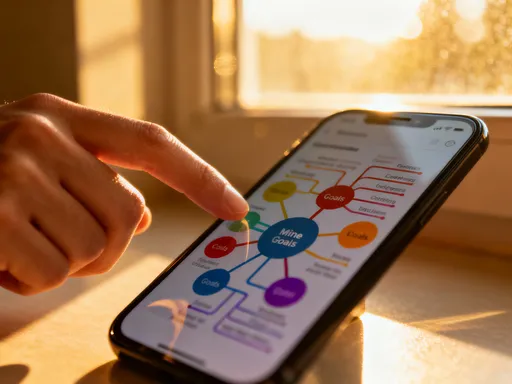
The first thing I did was create a central node: "My Week Ahead." From there, I added main branches: "Family," "Health," "Work," "Me Time." Under "Health," I added sub-branches like "Drink more water," "Move daily," and "Sleep 7 hours." I used different colors for each area—blue for family, green for health, purple for personal growth. I even added little icons: a water droplet, a running shoe, a book. It felt playful, not like work. And that was the first clue that this was different. I wasn’t just planning. I was engaging with my goals in a way that felt meaningful.
By day three, something shifted. Every morning, I opened the app while my coffee brewed. Just seeing that colorful map made me pause and think: "What matters most today?" I started linking habits to outcomes—like connecting "Walk 30 minutes" to "Feel less stressed." When I completed a task, I checked it off, and the app showed my progress with a gentle animation. It wasn’t flashy, but it felt rewarding. The app didn’t do the work for me—but it made the work feel possible. It gave me a sense of direction without pressure. And for the first time in a long time, I made it to Friday without giving up.
The real power wasn’t in the features—it was in how personal it felt. I wasn’t following someone else’s system. I was building my own. And because it was mine, I cared about it. That ownership made all the difference.
Turning Goals Into Living, Breathing Plans
One of the biggest surprises was how alive my goal map became. I expected it to be a planning tool—a digital version of my old notebook. But it turned into something more: a reflection of my real, changing life. I didn’t treat it like a rigid schedule. Instead, I let it evolve. If I missed a workout on Tuesday, I didn’t delete it. I moved it to Wednesday and added a note: "Tired—rest is part of the plan." If I finished reading a book earlier than expected, I added a new branch: "Start next book this weekend." The map wasn’t judging me. It was adapting with me.
This flexibility changed everything. I stopped seeing goals as all-or-nothing. Instead, I saw them as part of an ongoing journey. Every morning, I opened the app and reviewed my map. It took less than five minutes, but that small ritual grounded me. I could see what I’d accomplished, what needed attention, and how different parts of my life were connected. When work got busy, I could look at my map and say, "Okay, I can scale back on learning this week, but I won’t drop it completely." That kind of awareness gave me control, not guilt.
Weekly reviews became a quiet moment of reflection. Every Sunday evening, I’d sit with my tablet and look at the week behind me. What worked? What didn’t? What surprised me? I’d adjust the map for the week ahead—adding new goals, removing outdated ones, shifting priorities. It wasn’t about perfection. It was about presence. The map helped me stay in touch with my intentions, even when life got loud. And over time, I noticed something beautiful: progress wasn’t always in the big wins. Sometimes it was just showing up, adjusting, and trying again. And that was enough.
Why Using It Daily Made All the Difference
I’ll be honest—using the app once or twice a week gave me moments of clarity. But it was the daily use that created real change. At first, I didn’t understand why. Then I read about how repeated engagement with goals strengthens neural pathways in the brain. It’s like mental muscle memory. Every time you revisit your goals, you’re reinforcing them, making them more familiar, more real. You’re not just reminding yourself what to do. You’re rewiring your brain to care about those things.
I didn’t know the science at the time, but I felt it. After a few weeks of opening the app every morning, my goals started to feel like natural parts of my day. I didn’t have to push myself as hard. I just… remembered. I’d be washing dishes and think, "I should go for a walk after dinner." Or I’d be folding laundry and remember I wanted to call my sister. Those small, consistent check-ins built momentum. And momentum builds confidence. The more I saw my map growing—tasks completed, new goals added—the more I believed I could keep going.
There’s a compound effect to small actions. One check-in doesn’t change your life. But fifty check-ins over ten weeks? That builds a new habit. That creates a new rhythm. And that rhythm makes it easier to stay on track, even when motivation fades. I stopped relying on willpower and started relying on routine. And that made all the difference. The app didn’t make me more disciplined. It made discipline easier.
Sharing the Map: When My Family Joined In
I started using the app for myself, but it didn’t stay private for long. One evening, my partner saw me adding a new goal and asked, "What’s that colorful thing you’re working on?" I showed him my map, and instead of rolling his eyes, he said, "Wait—can we make one for the family?" I was surprised, but excited. So we did. We created a shared family map with branches for budget goals, weekend plans, home projects, and even kindness challenges—like "Compliment each other once a day."
What I didn’t expect was how much it changed our conversations. Instead of nagging or reminding each other, we’d sit together and review the map. "Hey, we said we’d start saving for the vacation—how’s that going?" or "You wanted to fix the garden gate—need help this weekend?" It wasn’t about accountability in a strict sense. It was about connection. We were seeing each other’s priorities, not just our to-do lists. And that made us more supportive, not more critical.
Our kids even got involved. We added a branch for family fun—"Try a new recipe," "Visit the botanical garden," "Stargaze." The map became a living document of our life together. It wasn’t perfect. We missed some things. But we were trying, together. And that shared effort created a sense of teamwork I hadn’t felt in years. The app didn’t fix our family dynamics. But it gave us a new way to grow together—visibly, kindly, and with purpose.
A Smarter, Calmer Way to Grow—Without the Burnout
After months of using the mind mapping app every day, the biggest change wasn’t that I got more done. It was that I felt calmer. More in control. Less guilty. I stopped obsessing over unfinished tasks because I could see the bigger picture. I wasn’t failing. I was adjusting. And that shift in mindset was everything. I no longer saw my week as a test of my worth. I saw it as a space to grow, learn, and care for the people I love.
The emotional benefits were deeper than I expected. Clarity. Focus. Peace. There’s a quiet joy in seeing your progress—not in a flashy, "look at me" way, but in a gentle, "I’m moving forward" way. That sense of purpose made even small actions feel meaningful. And when your actions feel meaningful, you don’t burn out. You stay engaged.
This isn’t about doing more. It’s about moving forward with intention. It’s about using technology not to add pressure, but to create space—for your goals, your family, your self. The app didn’t change my life overnight. But it gave me a tool to change it slowly, steadily, and sustainably. And that’s the kind of change that lasts.