From Hesitant to Confident: How a Simple Mind Map App Cleared My Mental Fog
You know that feeling when your thoughts are spinning, every decision feels heavy, and you keep second-guessing yourself? I’ve been there—staring at a blank screen, overwhelmed by choices, big and small. Then I found a tiny app that changed everything. It didn’t promise miracles, but slowly, it reshaped how I think. Now, I make decisions faster, feel clearer, and actually enjoy the process. This isn’t about productivity for productivity’s sake—it’s about reclaiming your mental peace. And if you’ve ever felt stuck between options, wondering if you’re making the right call, this might be exactly what you need too.
The Weight of Indecision in Everyday Life
Let’s be honest—how many times have you stood in front of the fridge, recipe book in hand, and still had no idea what to cook for dinner? Or stared at your to-do list, knowing there’s work to do, but unable to pick where to start? I used to live in that space. Not because I didn’t care, but because my mind felt like a browser with 50 tabs open—everything was running, nothing was loading. The weight wasn’t from laziness; it was from mental clutter. Every small choice—what to wear, which email to answer first, whether to sign the kids up for that new class—felt like it needed a committee meeting. And the more I delayed, the heavier it got.
What surprised me most was how this hesitation started to affect the people around me. My kids would ask, ‘Are we doing anything this weekend?’ and I’d say, ‘I don’t know yet,’ not because I didn’t love making plans, but because the thought of organizing it all—scheduling, packing, deciding where to go—felt exhausting. My husband would gently remind me about a doctor’s appointment I kept postponing, and I’d feel a little sting of guilt. It wasn’t that I didn’t want to take care of things. I just felt… foggy. Like my brain was wrapped in a thick blanket, and I couldn’t find the edges to pull it off.
And over time, that fog started to chip away at my confidence. I began to wonder: Am I just not good at this anymore? Did I lose my ability to lead my own life? I didn’t have anxiety in the clinical sense, but I carried a low hum of stress that never quite went away. Decisions, even small ones, came with a whisper: ‘What if you get it wrong?’ That whisper grew louder with every delay. I wasn’t just choosing meals or managing schedules—I was questioning my judgment, my competence, my clarity. And that’s when I realized: I didn’t need more time. I needed a clearer mind.
Discovering Mind Mapping Without Even Trying
I didn’t find this app in some tech roundup or viral TikTok trend. I found it the way so many good things come into our lives—through a friend who just happened to mention it over coffee. We were talking about how hard it was to plan her son’s birthday party. She wasn’t stressed about the cake or the theme; she was stuck on the guest list, the timeline, the budget—all the moving parts. And then she said, ‘You know what helped me? I just opened this little mind map app and dumped everything in there.’
I remember rolling my eyes a little. Another app? Really? I’d tried planners, bullet journals, sticky notes on the wall—nothing stuck. But she didn’t push it. She just said, ‘It’s not about doing it right. It’s about getting it out of your head.’ That phrase stayed with me. Because that’s exactly how I felt—like my thoughts were trapped inside, bumping into each other, going nowhere.
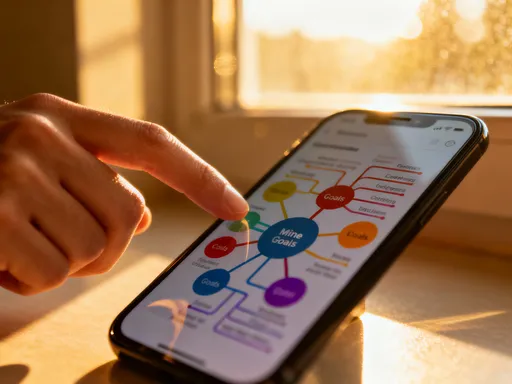
That night, after the kids were in bed, I downloaded it. No fanfare. No grand plan. I just opened it and typed: ‘Grocery List.’ But instead of a boring list, I created a central bubble and let ideas branch out: ‘Produce,’ ‘Dairy,’ ‘Snacks,’ ‘School Lunches.’ Then under ‘Dairy,’ I added ‘Milk,’ ‘Yogurt,’ ‘Cheese.’ Under ‘Snacks,’ I added ‘Popcorn,’ ‘Nuts,’ ‘Granola Bars.’ And something shifted. It wasn’t just a list anymore—it was a map. I could see what I already had, what I needed, and even where I was overspending. For the first time in weeks, I didn’t feel overwhelmed by the grocery store. I felt… prepared.
That small win made me curious. If this could help with groceries, what else could it help with? I didn’t expect it to change my life. I just wanted to stop feeling stuck. And that was enough to keep going.
How a Visual Layout Unlocks Faster Thinking
Here’s what I didn’t realize at first: my brain doesn’t think in straight lines. When I try to plan something in a list, it feels like walking down a narrow hallway—only one thought at a time, no side doors, no windows. But when I use the mind map, it’s like stepping into an open room with whiteboards on every wall. Ideas can go anywhere. They can connect. They can change. And that freedom changes everything.
Take planning a weekend trip. Before, I’d write a list: pack clothes, book hotel, check gas, buy snacks. But I’d forget things. Or I’d get stuck on one item—like what time to leave—and the whole plan would stall. With the mind map, I start with ‘Weekend Trip’ in the center. Then I create branches: ‘Packing,’ ‘Travel,’ ‘Activities,’ ‘Meals.’ Under ‘Packing,’ I add sub-branches for each family member. Under ‘Travel,’ I add ‘Route,’ ‘Stops,’ ‘Charging Cables.’ And here’s the magic: I can drag things around. If I remember I need to pick up sunscreen, I just drop it under ‘Packing’ or ‘Last-Minute Items.’ If I see that ‘Lunch on the Road’ and ‘Snacks’ are both under ‘Meals,’ I can merge them. The visual layout lets me see the whole picture at once.
And that’s where the speed comes in. When everything is out in front of me, my brain doesn’t have to hold onto each detail. I’m not juggling thoughts—I’m organizing them. Studies show that visual thinking reduces cognitive load, meaning your brain uses less energy to process information. That’s why, after using the app for a few weeks, I started making decisions faster. Not because I was suddenly smarter, but because I wasn’t wasting energy keeping track of scattered thoughts. The app did that for me. It was like having a co-pilot for my brain—quiet, helpful, and always ready.
Another thing I love? The way it handles uncertainty. In a list, you have to decide the order. In a mind map, you don’t. You can have five possible ideas for dinner, all floating around the center, and that’s okay. No pressure to pick one. Just let them live there until one feels right. That small shift—from forcing a choice to allowing options—lifted so much mental pressure.
Real-Life Wins: From Daily Tasks to Big Life Moves
The first real test came when my daughter asked about joining a new after-school program. It was a good opportunity, but it meant adjusting her schedule, adding another pickup, and increasing our monthly expenses. I felt that familiar freeze—part of me wanted to say yes, part of me was scared of overcommitting. So instead of agonizing in my head, I opened the app and created a map titled ‘After-School Program Decision.’
I made two main branches: ‘Pros’ and ‘Cons.’ Under ‘Pros,’ I added: ‘New skills,’ ‘Social time,’ ‘Boosts confidence.’ Under ‘Cons,’ I listed: ‘More driving,’ ‘Less homework time,’ ‘Cost.’ Then I added a third branch: ‘Solutions.’ Could we carpool? Could she do homework on the ride home? Could we adjust the budget? Seeing it all laid out, I realized the cons weren’t roadblocks—they were challenges with possible fixes. And the pros? They mattered. That night, I talked to my daughter, shared the map with her (yes, on my tablet!), and we made the decision together. It wasn’t impulsive. It wasn’t delayed. It was clear.
Then came a bigger one: I was offered a chance to take on a new role at work—more responsibility, better pay, but less flexibility. My instinct was to say no. But I didn’t want to let fear decide for me. So again, I mapped it out. I created branches for ‘Career Growth,’ ‘Work-Life Balance,’ ‘Financial Impact,’ and ‘Personal Energy.’ I asked myself honest questions: Will this drain me? Will it help me grow? Can I protect my family time? Seeing the answers visually helped me realize that with some boundaries—like no emails after 7 p.m.—this could work. I said yes. And three months in, it’s been one of the best decisions I’ve made.
Even everyday conflicts started to shift. When my son and daughter kept arguing over screen time, instead of setting a rule blindly, I mapped out their perspectives. What did they each want? What were their concerns? Seeing their needs side by side helped me create a schedule that honored both. It wasn’t about winning. It was about understanding. And that changed the tone of our home.
Making It a Habit Without the Hustle
One thing I was determined not to do was turn this into another chore. I didn’t want to spend an hour every Sunday planning my week. I didn’t want to feel guilty if I missed a day. So I started small—just five minutes a day, usually while I had my morning coffee. Sometimes I’d map out my to-do list. Other times, I’d just dump whatever was on my mind: ‘Call dentist,’ ‘Plan birthday gift,’ ‘Worried about mom’s health.’
The key was consistency, not perfection. I didn’t need to color-code or make it pretty. I just needed to get things out of my head and into the open. On busy days, I used the voice input feature—just speaking my thoughts into the app while I folded laundry or stirred dinner. It felt natural, not forced. And because it took so little effort, I didn’t dread it. In fact, I started to look forward to it. That five-minute pause became my mental reset.
I also learned to start with low-stakes decisions. Don’t jump into mapping your career change on day one. Begin with ‘What’s for dinner?’ or ‘How should I organize the pantry?’ Build the habit with easy wins. That way, when a bigger decision comes, the tool feels familiar, not foreign. And over time, it became less of a ‘tool’ and more of a companion. It wasn’t something I used—it was part of how I thought.
Another trick? I kept it private. This wasn’t a planner to share with my family or boss. It was my space—messy, emotional, honest. I could write ‘I’m scared’ or ‘I don’t know’ without judgment. And that safety made me more willing to be real with myself.
Why This Isn’t Just Another Productivity Gimmick
Let’s be real—there are tons of apps that promise to fix your life. Some demand daily check-ins, streaks, perfect data entry. They make you feel like a failure if you miss a day. This app is different. It doesn’t care if your map is messy. It doesn’t scold you for changing your mind. In fact, it encourages it. You can drag ideas around, delete them, add new ones, change colors—no penalties, no guilt.
That flexibility is everything. Life isn’t linear. Our thoughts aren’t perfect. And any tool that expects us to be ‘on track’ every day is setting us up for disappointment. But this app meets you where you are. Feeling scattered? Dump it all in. Feeling focused? Build a clean plan. It adapts to you—not the other way around.
And here’s what I love most: it doesn’t measure success by how much you do. It measures it by how clearly you think. I’m not doing more tasks than before. I’m making better decisions, faster. I’m feeling less stuck. I’m trusting myself again. That’s not productivity for the sake of busyness. That’s productivity for the sake of peace.
It’s also not about replacing human thinking. It’s about enhancing it. Like wearing glasses—you still see the world, but more clearly. The app doesn’t think for me. It helps me think for myself.
A Clearer Mind, A Lighter Heart
Looking back, I realize the app didn’t just help me make decisions. It helped me reclaim my mental space. That fog I used to carry? It’s lifted. Not because my life is simpler—kids still need rides, work still gets busy, groceries still need buying—but because my mind isn’t fighting itself anymore.
With less energy spent on second-guessing, I have more to give—to my family, my work, myself. I’m present in moments I used to rush through. I laugh more. I worry less. I feel more like… me. And isn’t that what we all want? Not a perfect life, but a clear one. One where we can move forward without dragging the weight of indecision behind us.
Technology gets blamed for stealing our attention, our time, our peace. But sometimes, it gives it back. This little app didn’t shout for my attention. It didn’t buzz or flash. It just sat quietly, ready whenever I needed it. And in its simplicity, it gave me something priceless: confidence in my own mind.
If you’ve ever felt stuck between choices, if you’ve ever doubted your judgment, if you’ve ever wished you could just see your thoughts clearly—try this. Start small. Be kind to yourself. Let the map grow as you grow. Because clarity isn’t about having all the answers. It’s about giving yourself the space to find them. And when you do, you’ll realize something beautiful: you were never lost. You just needed a little help finding your way back to yourself.