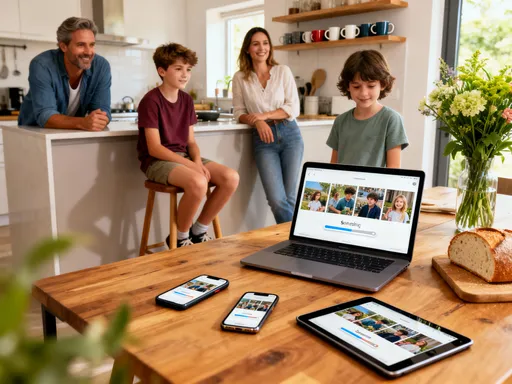
Synced 12 devices across 3 homes: The app that finally brought my family’s chaos under control
Life used to feel like a juggling act—photos lost, work files out of date, my kids’ school projects stuck on one laptop. I was constantly stressed, chasing versions and begging everyone to “just save it properly.” Then I found one app that quietly transformed how we share, store, and sync everything. No more duplicates, no more confusion—just peace of mind. If you’ve ever lost a file or argued over where the vacation photos are, this is for you. It didn’t fix everything overnight, but slowly, it changed how we move through our days—lighter, calmer, more connected. And honestly? I didn’t know how much I needed it until it was already working.
The Breaking Point: When File Chaos Hit Home
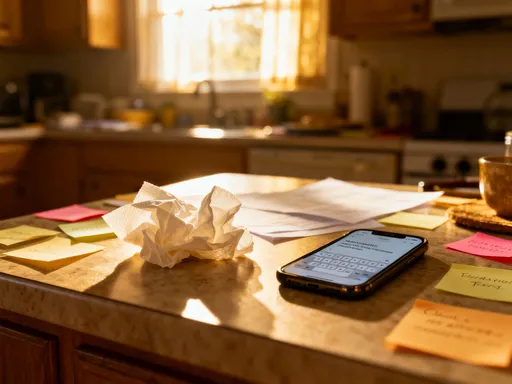
I’ll never forget the morning of my son’s parent-teacher conference. I was rushing to print his latest science project, the one he’d worked on all week, only to realize—again—that it wasn’t on my laptop. Was it on his tablet? His school-issued Chromebook? Maybe saved in the cloud but under a different account? I called my husband, who was already at work. “Did you see it last night?” I asked, voice tight. He paused. “I think he was on Grandma’s iPad after dinner.”
My stomach dropped. We had just dropped the kids off at their grandparents’ house for the weekend. The file was literally across town, on a device I couldn’t access, and I had ten minutes to get something presentable. I ended up printing a half-finished draft from an old email attachment. It wasn’t his best work. I could see the disappointment in his teacher’s eyes—and worse, in my son’s.
That moment wasn’t just about a missing file. It was about the constant weight of trying to keep up. Between school assignments, work deadlines, family photos, medical records, and shared schedules, our digital lives were scattered across devices, accounts, and homes. We weren’t lazy—we were just overwhelmed. I wasn’t a bad mom. I wasn’t bad with tech. I was just using tools that weren’t built for real life.
The frustration didn’t stop there. I’d spend Sunday nights going through each device, asking the kids, “Did you save your homework?” I’d dig through folders named “School Stuff” or “Project Final Final V2” and still come up empty. My husband would send me a budget spreadsheet, I’d update it, then realize he was still working off the version from three days ago. We weren’t on the same page—literally. And every time something got lost or overwritten, it felt like another small failure.
What surprised me most was how much emotional energy it drained. It wasn’t just time—it was mental space. I’d lie in bed thinking, Did I back that up? Did the doctor get the lab results? Where did I put that recipe for dinner tomorrow? It felt like I was always one step behind, always reacting instead of living. And I started to wonder—was this just how modern family life had to be? Or was there a better way?
Why Most Syncing Tools Failed Us
I wasn’t alone in this struggle. I knew other moms dealing with the same mess. So I started looking for solutions. I tried the big names—the ones you see in ads, the ones that promise “seamless syncing across all your devices.” At first, they seemed promising. I’d sign up, create a family account, invite everyone, and feel hopeful. But within days, the cracks appeared.
One popular service worked beautifully—for me. My files synced instantly, my photos backed up automatically, my notes stayed up to date. But the moment I shared a folder with my kids, things broke. Their devices wouldn’t sync the changes. Or worse, they’d accidentally delete something, and I couldn’t recover it easily. I realized the tool was designed for individuals, not families. It assumed everyone had the same level of tech confidence, the same habits, the same attention to detail. And in our house? That wasn’t the case.
Another app looked great on paper—real-time collaboration, shared folders, version history. But the interface was confusing. My parents, who help with childcare and sometimes need access to medical info or school schedules, couldn’t figure out how to open a shared document. “Where’s the file?” my mom would text me. “I see a link but it says I don’t have permission.” I’d have to walk her through it over the phone, and by then, the moment had passed. The tool was smart, but it wasn’t kind. It didn’t meet people where they were.
Then there was the issue of syncing delays. I’d upload a birthday invitation to a shared calendar, only to find out my sister hadn’t seen the update. “Why didn’t you tell me the party was moved?” she asked, hurt in her voice. I showed her the calendar. “It’s right there!” But her phone hadn’t synced in hours. The app claimed to be “real-time,” but in reality, it was lagging behind, creating confusion instead of clarity.
And permissions—oh, the permissions. One tool gave everyone full editing rights by default. So my daughter, trying to be helpful, rearranged the entire family budget spreadsheet. My husband added a note to a school form that was already submitted. Files got overwritten, folders got renamed, and I spent more time fixing access than actually using the tool. I needed something that gave me control without making me a digital gatekeeper. I didn’t want to hover. I wanted to trust.
What I learned the hard way is that most syncing tools are built for productivity, not for life. They’re made for teams in offices, not families in homes. They prioritize speed and features over simplicity and emotional safety. And in a family, where one misstep can mean a lost photo, a missed appointment, or a hurt feeling, that difference matters.
Finding the One That Actually Worked
I almost gave up. I thought maybe we just had to accept the chaos. Then, over coffee with an old friend, she mentioned how her family had “finally stopped losing things.” I rolled my eyes—another app pitch. But she didn’t name a brand or drop tech jargon. She just said, “It’s like the house remembers everything for us now.” That stuck with me.
She told me about an app she’d started using after her dad had a minor health scare. They needed quick access to medical records, prescriptions, and care instructions—across three homes, four adults, and two aging parents. The usual tools failed. Then she found one that just… worked. No drama. No setup manual. No begging people to “please log in.”
I decided to try it. And from the very first moment, it felt different. The setup took less than ten minutes. I created a family hub—a central space where we could store and share what mattered. I invited my husband, the kids, and even my parents. No technical questions. No confusing prompts. Just a simple “Join our family space?” with a single click.
The real magic happened the next day. My daughter called from school. “Mom, I finished my science report. Can you print it?” I opened my phone, went to the school folder, and there it was—her updated file, already synced from her school laptop. I didn’t have to ask her to email it. I didn’t have to check three different devices. It was just… there. And I felt something I hadn’t in years: calm.
That small moment was a turning point. I started noticing other things—how my husband’s grocery list updated in real time when he added eggs, how my mom could open the family calendar without asking for help, how vacation photos from my sister’s phone appeared on our TV screen within minutes. It wasn’t flashy. There were no pop-ups, no notifications screaming for attention. It just worked, quietly, in the background.
And for the first time, I didn’t feel like I had to manage everything. The app didn’t replace me—it supported me. It gave me space to breathe, to focus on being present instead of being in control. I wasn’t chasing files anymore. I was living with them.
How It Gives You Real Control (Without the Stress)
One of the biggest fears I had was losing control. I didn’t want to hand over our family’s digital life to something that felt unpredictable. But this app didn’t ask me to give up control—it gave me smarter ways to use it.
For example, the folder structure is simple but powerful. I created main categories: School, Health, Travel, Recipes, and Memories. Under School, each child has their own subfolder. Under Health, we have subfolders for each family member, plus one for shared documents like insurance cards and vaccination records. It’s not complicated, but it’s clear. Everyone knows where to look and where to save.
But the real game-changer is permissions. I can decide who sees what and who can edit it. My husband and I have full access to everything. The kids can view and edit their school folders, but they can’t delete anything from the family budget or change the vacation plans. My parents can view the health records and calendar, but they can’t make changes unless we approve. It’s not about mistrust—it’s about protection. It means we can share without fear.
And then there’s version history. I can’t tell you how many times this has saved us. My son once deleted his entire history project by accident. I was ready to panic. But with one click, I restored the file from yesterday’s version. No data loss. No tears. Just peace of mind.
Another feature I love is device-specific settings. I can choose what syncs to which device. My work files don’t clutter my daughter’s tablet. Her school photos don’t take up space on my husband’s work phone. It’s like having a smart filter that respects everyone’s space.
And the best part? I don’t have to micromanage. The app runs quietly in the background. I get gentle notifications when something important changes, but I’m not bombarded. I can check in when I want to, not because I have to. It’s control that feels light, not heavy. It’s the kind of control that lets you relax, not tense up.
Making Family Life Smoother, One Sync at a Time
Since we started using this app, the little moments have gotten easier—and more meaningful. Take grocery shopping. Before, I’d text my husband, “Did you add milk?” He’d say yes, but then I’d get to the store and realize he forgot. Now, we share one list. When he adds eggs, I see it instantly. When I check off apples, he knows not to buy more. It’s a small thing, but it’s one less thing to argue about.
Then there’s travel. Last month, we went to visit my sister. She shared a folder with the itinerary, packing list, and restaurant reservations. The kids could see the schedule. My husband could pull up the hotel address. I could access the medical info in case anyone got sick. Everything was in one place, on every device. No printing, no emailing, no “Where’s that PDF?”
But the most powerful moment came during a routine doctor’s visit. My youngest had a sudden fever, and the pediatrician asked for her vaccination record. I didn’t have the paper copy. I didn’t have to. I opened the Health folder on my phone, pulled up the scanned document, and showed it to the nurse. She smiled. “That was fast.” In that moment, I wasn’t just grateful for the app—I was grateful for the calm it gave me. I wasn’t scrambling. I wasn’t apologizing. I was prepared.
And the photos—oh, the photos. We used to have hundreds scattered across phones, tablets, and laptops. Now, when someone takes a picture, it automatically goes into our shared Memories folder. We can all view it, comment on it, even create shared albums. Last week, we spent an evening laughing over a slideshow of my daughter’s first piano recital. No one had to send files. No one had to ask. It was just there, waiting for us to enjoy.
These aren’t just conveniences. They’re emotional anchors. They’re the difference between stress and ease, between disconnection and presence. They remind us that technology doesn’t have to complicate life—it can protect it.
Simple Steps to Set It Up for Your Household
If you’re thinking, “This sounds great, but I’m not tech-savvy,” I get it. That’s exactly how I felt. But setting this up was easier than I expected. Here’s how I did it—step by step.
First, I created a shared family hub. I gave it a simple name—“The Smith Family” (not our real name, but you get the idea). This became our central space. From there, I created the main folders: School, Health, Travel, Recipes, and Memories. I didn’t overthink it. I just asked myself, “What do we need to share?”
Next, I added subfolders. Under School, I made one for each child. Under Health, one for each person plus a shared folder for insurance and forms. I kept the names clear: “Emma - 5th Grade,” “Ben - Math Project,” “Dad - Medications.” No vague labels. No “Stuff” or “Important.”
Then I invited the family. I started with my husband. He accepted the invite on his phone, and within seconds, he could see the folders. Then I added the kids. For younger ones, I helped them log in the first time. For my parents, I walked them through it over FaceTime. The app sent them a simple link—no passwords to remember, no confusing steps.
After that, I set permissions. I made sure the kids could edit their school work but not delete family documents. I gave my parents view-only access to health records, with the option to request edits if needed. My husband and I have full access. It took about ten minutes, and now I don’t have to worry about accidental changes.
Finally, I turned on automatic backups. I set it to back up all devices every night. I also created a weekly habit—every Sunday evening, I do a quick check. Are the folders tidy? Did anyone save something in the wrong place? It takes five minutes, and it keeps everything running smoothly.
The key is to start small. You don’t have to do it all at once. Begin with one folder—maybe groceries or photos. Get comfortable. Then expand. And remember: it’s not about perfection. It’s about progress. Even a little organization can bring a lot of peace.
More Than Files—It’s Peace of Mind
Looking back, I realize this wasn’t just about syncing files. It was about syncing our lives. It was about creating a space where we could all feel safe, seen, and supported. It wasn’t about being perfect—it was about being together.
There’s a quiet joy in knowing that the things that matter are taken care of. That my child’s hard work won’t disappear. That my parents can find what they need without asking. That I can focus on the moment, not the mess.
One evening last week, I was putting the kids to bed. My daughter said, “Mom, can we look at the beach photos again?” I pulled them up on the tablet. We scrolled through the waves, the sandcastles, the sunset. My son pointed at a picture of us all hugging. “That was the best day,” he said. And in that moment, I didn’t think about where the file was stored or who had access. I just felt it—the love, the connection, the memory.
That’s what this app gave me back: not just order, but presence. Not just control, but freedom. It didn’t change my family. It just helped us show up for each other—without the noise, without the stress, without the fear of losing what matters.
If you’re tired of chasing files, of feeling like you’re always one step behind, I want you to know—there’s another way. It’s not about being tech-savvy. It’s not about having the newest gadgets. It’s about choosing tools that serve your life, not complicate it. And when you find one that does? It doesn’t just organize your files. It organizes your peace.