I’m on the train—can you grab milk? How our family’s to-do list became a lifeline
We’ve all been there: rushing to work, earbuds in, only to get a text: “Did you pick up the dog food?” Again. Forgotten. It’s not laziness—it’s life. But what if the daily chaos could actually bring us closer? I discovered that a simple shared to-do list didn’t just organize errands—it turned commute time into connection, turned frustration into teamwork, and quietly helped us all grow. This is more than an app. It’s how my family finally started remembering—together. And honestly, it changed everything.
The Commute Confession: When "I’ll Remember" Became a Lie
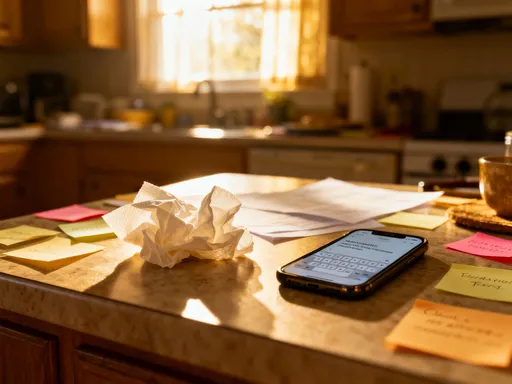
Picture this: you’re on the 8:15 train, wedged between a man reading a newspaper and someone reheating fish in the microwave. Your coffee’s half gone, your mind’s racing through meetings, deadlines, and that email you forgot to send last night. Then—ping. A text from your partner: “Did you remember the milk?” Your stomach drops. Again. You didn’t. You *swore* you would. You even said, “Don’t worry, I’ll remember,” like that magical phrase could override human memory. But it can’t. And it’s not just milk. It’s the school forms, the birthday gift, the vet appointment, the light bulbs for the hallway. The list of things we forget isn’t proof of neglect—it’s proof of how full our lives are.
For years, I carried the weight of these little failures like invisible guilt stones in my pocket. I’d walk into the kitchen, see the empty fridge, and feel that familiar pang: *I let them down again.* My kids would ask, “Did you get the snacks for the party?” and I’d have to say no, watching their faces fall. My partner would sigh, not out of anger, but exhaustion. Not because I didn’t care—but because caring wasn’t enough. We were all trying, all loving, all overwhelmed. We weren’t failing as parents or partners. We were just missing a system.
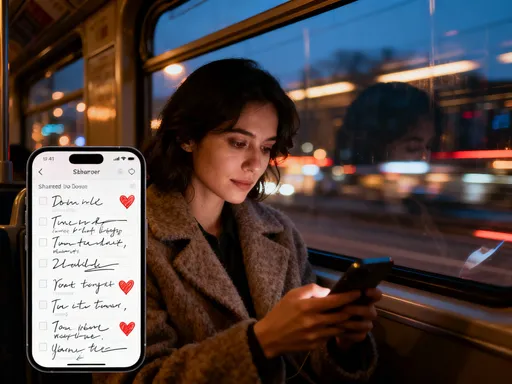
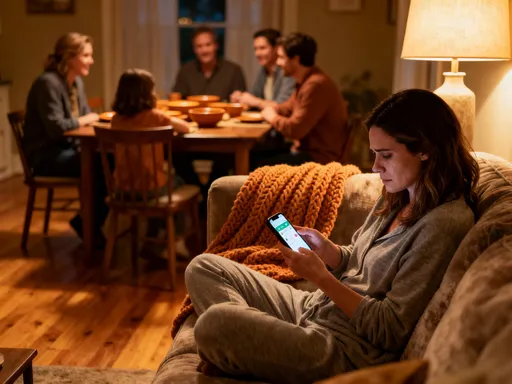
Then one rainy Tuesday, stuck on a delayed train, I opened a shared to-do list app on a whim. Not because I was tech-savvy, but because I was desperate. I typed: “Milk – urgent.” And within minutes, my partner replied: “Got it. Also added eggs.” I stared at the screen. Someone else had my back. In that moment, something shifted. The commute wasn’t just dead time anymore. It was time I could *contribute*. Time I could *connect*. The list wasn’t a digital chore board—it was a lifeline. And it wasn’t about perfection. It was about presence.
From Chores to Connection: How a Checklist Became a Conversation Starter
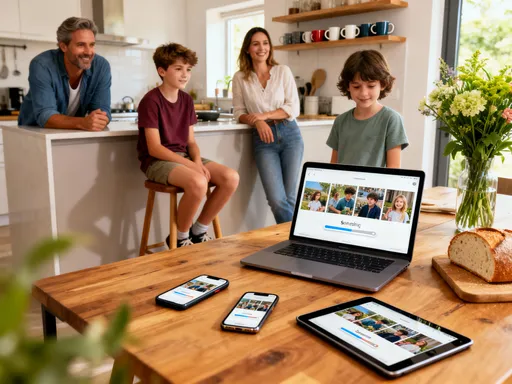
You might think a to-do list is cold. Clinical. All checkmarks and deadlines. But ours? Ours started talking back. Not literally, of course—but through little notes, voice messages, even emojis that felt like hugs. What began as “Buy Mom’s birthday card” turned into a family event. My daughter added, “Get the sparkly one with the cat!” My son recorded a voice note while riding the bus: “Dad, if you see cupcakes, grab some. She likes pink frosting.” And my husband, who once claimed he “wasn’t good at surprises,” showed up with balloons—because someone had quietly added “+ balloons?” to the grocery list.
Suddenly, the list wasn’t just about tasks. It was about care. It became our backchannel. A way to say, “I’m thinking of you,” without saying it at all. When my teenage daughter started using it, I was shocked. I thought she’d ignore it—like most teens do with family rules. But one day, I saw a new item: “Pick up little brother’s dinosaur cookies—his favorite.” She’d checked it off with a green smiley face. Later, I asked why she did it. She shrugged and said, “He told me he wanted them. I was at the store anyway.” That small act said more than any lecture on responsibility ever could.
We started assigning “secret missions.” Not chores—*adventures*. “Find the reddest apple for Mom,” or “Pick a book you think Grandma would love.” These weren’t demands. They were invitations. And the best part? They sparked conversations. My husband and I started leaving audio notes: “Saw the new bakery—got your croissant. You’re welcome. ;)” It felt playful. Human. The list didn’t replace talking—it made us talk more. And not just about logistics. We talked about feelings, preferences, little joys. We learned that Dad likes peppermint tea, that Mom misses fresh lilacs in spring, that the dog goes wild for peanut butter treats. The list became a mirror of our love—quiet, consistent, and full of detail.
Skill Building in Small Moments: What We Learned While Crossing Off Tasks
Here’s something no one tells you: the commute can be a classroom. Not in the formal, sit-down-with-a-textbook way. But in the quiet, curious, “I’ve got 20 minutes and Wi-Fi” kind of way. When my son was assigned “Find the best deal on new headphones,” he didn’t just pick the cheapest pair. He spent his bus ride comparing reviews, battery life, noise cancellation. He came home saying, “I learned how to read product specs.” That wasn’t homework. That was real-world learning—sparked by a to-do list.
Same with my husband. He’s always hated grocery shopping. “It’s a waste of time,” he’d say. But when we started using the list, he began using his train time to research. “How do you pick a ripe avocado?” became a 10-minute deep dive. He watched videos, read tips, even messaged me a photo from the produce aisle: “This one?” I replied with a thumbs-up. Now, he brags about his melon-picking skills. “I can smell the sweet ones,” he says, dead serious. It’s adorable. But it’s also powerful. He’s not just buying fruit. He’s building confidence.
For me, the list became a budgeting tool. I started tagging purchases: “$4.99 – milk,” “$12.50 – birthday card.” Over time, I could see patterns. We were spending more on snacks, less on household items. I shared the summary with the family, not to scold, but to learn. We talked about choices, priorities, small savings. My daughter suggested, “What if we buy generic cereal? It tastes the same.” And she was right. These weren’t big financial moves. But they were real ones. We were learning to make decisions together—not just about money, but about values.
Even our youngest picked up skills. At first, he just checked off “Got juice box” with a sticker emoji. But soon, he started asking, “Can I choose the flavor?” Then, “Which one is healthier?” We turned it into a game: “Find the one with no added sugar.” He felt proud. Capable. And that’s the thing—these small moments of learning, scattered across commutes and errands, added up. We weren’t just completing tasks. We were growing. Together.
The Commute Upgrade: Turning Transit Time into Family Time
Let’s be honest: the daily commute can feel lonely. You’re surrounded by people, yet disconnected. Headphones on, eyes down, mind elsewhere. It’s easy to feel like a cog in a machine. But what if that time—those 30, 45, 60 minutes—could be part of your family life? Not stolen from it? That’s what happened when we started using the list as a bridge.
Now, when I’m on the train, I don’t just scroll. I check in. “Need anything from the pharmacy?” “Should I grab soup if it’s on sale?” I leave notes like, “You’ve got this today!” for my daughter before her big test. My husband records voice updates: “Just picked up the dry cleaning. Also, I love you.” Silly? Maybe. But it matters. It turns isolation into intimacy. It reminds us we’re not alone in the daily grind.
One morning, my son missed the school bus. He was stressed, late, and grumpy. But then he pulled out his phone, opened the list, and saw a new task: “You’re awesome. Also, Mom left your lunch in the blue bag.” Under it, his sister had added, “And I saved you the last cookie. ;).” He smiled. Not because of the cookie—though that helped. But because he felt seen. Connected. Even when we’re apart, the list keeps us close.
And here’s the unexpected gift: shared responsibility. Before, I felt like the family manager—the one who remembered, reminded, followed up. Now, it’s distributed. My partner picks up prescriptions on his way home. My daughter checks the list before heading to the library. Even our dog walker added an item once: “Buddy needs more poop bags—left extra by the door.” It’s not about fairness. It’s about unity. We’re all in it. And that changes everything.
Designing a List That Feels Like Home
You might think, “Great, but how do I start? I don’t want another complicated app.” I get it. The key isn’t the tech—it’s the tone. Our list doesn’t feel like a spreadsheet. It feels like a conversation. And that’s by design.
First, we use names that spark feeling. Not “Buy bread,” but “Get sourdough for Sunday toast—Dad’s favorite.” Not “Pay bill,” but “Let’s keep the lights on 💡.” We use emojis like punctuation. A flower for Grandma’s flowers. A star for a job well done. For the kids, we use icons—🍭 for candy, 🐶 for dog treats. It’s visual, fun, easy to scan.
We assign “commute-friendly” tasks. Things that can be done in passing: picking up mail, grabbing coffee, checking the mailbox. We avoid long chores—those go on the weekend list. And we celebrate small wins. When someone checks off “Got the birthday card,” we react with heart emojis, clapping hands, even little audio cheers. It’s not childish. It’s joyful.
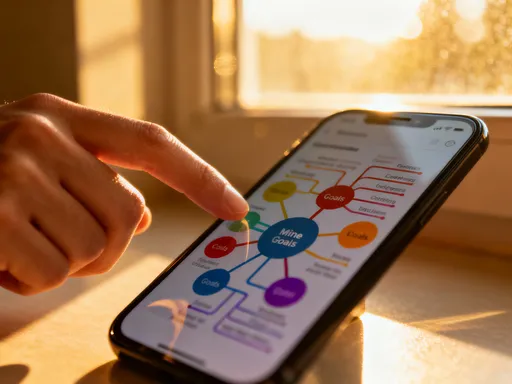
We chose an app that syncs across devices, sends gentle reminders, and allows voice entry. Because when you’re holding groceries and a coffee, typing “Got the milk” is hard. But saying it? Easy. We also use shared notes for bigger plans—“Vacation ideas,” “Thanksgiving menu.” It’s not just for errands. It’s for dreams.
And we keep it light. No guilt. No shaming. If someone forgets? We add it back with a smiley face. “No worries—still need milk!” The goal isn’t control. It’s connection. The list works because it feels safe. Welcoming. Like home.
When the List Did More Than Remember—It Healed
Life isn’t always smooth. There are seasons of stress, grief, overwhelm. Last year, my mother was ill. I was stretched thin—working, caregiving, parenting. I stopped talking. Not out of anger, but exhaustion. I didn’t have words. But I still opened the list every day. And my family? They didn’t demand more from me. They showed up in quiet ways.
My husband added: “Pick up your favorite tea ☕—you’ve earned it.” My daughter wrote: “Love you, Mom. Also, I did the dishes.” My son left a voice note: “We’re proud of you.” They didn’t try to fix me. They just *saw* me. And in that space, the list became a language of care. I couldn’t say “I’m struggling,” but I could check off “Got the prescription.” And they knew.
One evening, I found a new item: “You’re doing great. Really.” No task. No deadline. Just love. I cried. Not from sadness—but from relief. I wasn’t alone. The list had become more than a tool. It was a witness. A keeper of our quiet moments. It didn’t solve my pain, but it held space for it. And that made all the difference.
Technology is often blamed for pulling us apart. But in this case, it helped us stay close. Not through grand gestures, but through small, steady acts. A reminder. A note. A shared task. These tiny threads wove a safety net—one I didn’t know I needed until I was falling.
Beyond the List: A New Rhythm of Family Life
It’s been over a year now. The milk gets picked up. The cards are bought. The dog has his treats. But more than that—we have each other. The shared to-do list didn’t just reduce forgetfulness. It deepened our relationships. It taught us to listen, to notice, to show up in small ways.
We’re not perfect. We still forget things. We still have busy days, tired moments, miscommunications. But now, we have a rhythm. A way of moving through life together, even when we’re apart. The list is no longer just a tool. It’s a record of our care. A living journal of who we are and how we love.
When I’m on the train now, I don’t feel isolated. I feel connected. I check the list, reply to a note, add a silly emoji. I hear my daughter’s voice in my head: “Don’t forget the cookies!” And I smile. Because I won’t. Not because I have a perfect memory—but because I have a family who helps me remember.
Technology, at its best, doesn’t replace human connection. It amplifies it. It gives us new ways to say, “I’m here. I see you. I’ve got this.” And sometimes, that’s all we need. One checkbox. One text. One “I’m on the train—can you grab milk?” And the beautiful answer: “Already did.”