Mapped 37 Family Trips Over 4 Years: This Route Planner Saved Our Summers
Remember that feeling—backseat fights, missed turns, and everyone asking, “Are we there yet?” I lived it. For years, our family trips were stressful, not special. Then I found a simple tool that changed everything. It didn’t just plan routes—it preserved memories. No tech jargon, no complicated steps. Just smarter trips, less stress, and more moments that stuck. If you’ve ever wished your journey could feel as good as the destination, this is for you. It wasn’t about fancy features or speed. It was about making space—for laughter between exits, for spontaneous detours, for the kind of moments that don’t happen when you’re arguing over directions. This is how one small piece of technology quietly transformed how we travel, connect, and remember.
The Summer That Almost Broke Our Family Road Trip Tradition
It started like all the best ones do—with hope. The kids were bouncing in their seats, juice boxes tucked in the cooler, and the playlist was already halfway through our favorite sing-along songs. We were headed to the lake house, a place that had hosted four generations of family memories. This trip was supposed to be easy. Familiar roads. A relaxed pace. But by mile 120, everything had unraveled.
My phone died because the car charger wasn’t compatible with the new model. My husband, trying to navigate without GPS, took a wrong turn that added nearly an hour. The kids were cranky, fighting over legroom. We missed the reservation at the lakeside diner—our tradition since my own childhood—and by the time we arrived, it was past bedtime. No golden sunset. No ice cream on the pier. Just exhaustion and a quiet sense of disappointment.
That night, lying awake, I realized something deeper had gone wrong. It wasn’t just the missed stops or dead batteries. It was the lost connection. We had been in the same car, but we weren’t together. The journey, meant to bring us closer, had pulled us apart. I kept asking myself: why does something so joyful in theory feel so draining in practice? And then it hit me—the problem wasn’t the destination. It was the lack of intention in how we got there. We showed up with love and snacks, but no plan. No rhythm. No way to keep everyone calm, engaged, and present.
I knew we couldn’t keep doing it this way. Family trips were too important to become sources of stress. I didn’t want my kids to remember the yelling or the delays. I wanted them to remember the golden hour light through the trees, the smell of pine after rain, the way we all sang “Don’t Stop Believin’” off-key. So I started looking for a better way. Not a luxury upgrade or an expensive gadget—just something simple that could help us travel with more ease, more joy, and more togetherness.
How a Simple Route Planner Became Our Family’s Memory Keeper
It began with a text from my sister. “Have you tried that route planner app? The one with the photo stops?” I hadn’t. I assumed it was another flashy navigation tool—faster routes, real-time traffic, voice commands. But when I downloaded it, I realized it was different. It wasn’t built for efficiency. It was built for experience.
I started using it not to avoid traffic, but to design moments. I mapped out our next trip with care—adding rest stops near playgrounds, tagging a historic covered bridge I’d read about, and pinning a little pie shop halfway through. I even added a note: “Play ‘I’m Gonna Be (500 Miles)’ here.” When I showed the kids, they didn’t roll their eyes. They got excited. “We’re stopping at the giant cow?” my youngest asked. “Yes,” I said. “And we’ll take a picture.” That was the first time a road trip felt like an adventure before we even left the driveway.
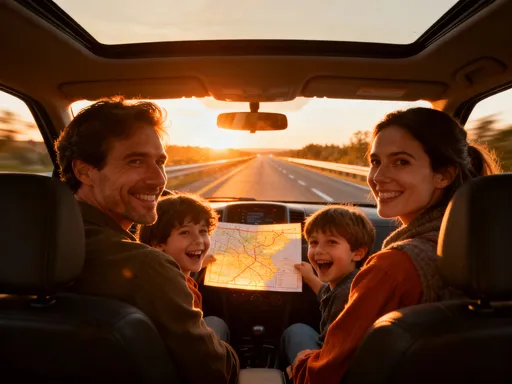
On the drive, something shifted. Instead of counting down the miles, the kids counted down to the stops. “Only 40 more minutes to the cow!” became a rallying cry. My husband, relaxed because he wasn’t navigating, joined in the playlist. We took a photo under the cow statue, laughed at how silly it looked, and saved it right in the app. Later, when I opened the route again, there it was—a little photo pin on the map, labeled “Molly’s First Cow.”
That’s when I realized this wasn’t just a planner. It was becoming a memory keeper. The app didn’t replace our experiences. It helped us notice them. It gave us permission to slow down, to point things out, to say, “Wait, look at that!” without feeling like we were falling behind. And the best part? It required zero tech skills. No syncing devices, no complicated settings. Just tap, add, save. For the first time, I felt like we weren’t just surviving the journey—we were savoring it.
Turning GPS Dots into Emotional Landmarks
We started getting creative. Instead of just saving highways and gas stations, we began tagging moments. Not big ones—just little things that made us laugh or pause. “Where Dad sang ‘Sweet Caroline’ so loud the windows shook.” “The ice cream meltdown in the parking lot.” “First mountain view—everyone said ‘Wow’ at the same time.”
Each of these became a pin on our saved route. I’d add a photo, a voice note, or just a few words. Later, when we were home, I’d open the app and scroll through the trip like a story. My daughter loved going back to the “rainbow crosswalk” stop. “Remember how we all took turns jumping on the colors?” she’d say. These weren’t just map points. They were emotional landmarks—tiny anchors that held big feelings.
What surprised me most was how the kids started noticing things on their own. “Mom, can we add this spot?” my son asked after we saw a field of sunflowers. He took a photo, and I helped him tag it. That moment—the initiative, the pride, the memory-making—was priceless. The app didn’t create the joy. It just gave it a place to live.
Over time, our saved routes became more than travel logs. They became family history. We revisited them on snow days, rainy afternoons, even during arguments. “Remember when we all got lost near the lake and found that little bookstore?” I’d say. Instantly, the mood would shift. The planner wasn’t just guiding us geographically. It was helping us reconnect emotionally. Technology, in this small way, wasn’t distancing us from real life. It was deepening it.
Planning Ahead Without Losing the Magic of Spontaneity
I’ll admit, I was nervous at first. Wouldn’t planning every stop kill the adventure? Wouldn’t it feel too rigid, too controlled? But the opposite happened. Knowing the route gave us freedom—not less, but more.
Because we had a clear plan, we weren’t afraid to stray from it. When we saw a hand-painted sign for a “Blueberry Maze,” we didn’t hesitate. I opened the app, checked the estimated delay—12 minutes—and said, “Let’s do it.” No stress. No guilt. Just curiosity rewarded. And it was perfect. We spent an hour picking berries, laughing at the maze’s dead ends, and buying a pie to go. That detour became one of our favorite memories from the trip.
The planner didn’t lock us in. It grounded us. It gave us a safe base from which to explore. Like training wheels on a bike, it provided just enough structure to let us take risks. We started looking for odd roadside attractions, local farmers’ markets, and scenic overlooks—because we knew we could always find our way back.
And here’s the thing: spontaneity doesn’t mean chaos. It means being present enough to say yes when something wonderful appears. The app didn’t remove the unknown. It just made it safer to embrace. We weren’t just following a map. We were building a rhythm—planned moments, then space for surprises, then a return to the path. That balance changed everything.
Teaching Kids to Connect with the Journey, Not Just the Destination
One of the most unexpected gifts was how it helped my kids engage with the trip. Before, they were passengers—sometimes happy, sometimes restless. Now, they were co-creators. I started inviting them to help build the route. “Pick a fun stop,” I’d say. “Find something weird or beautiful.”
They loved it. My daughter found a “World’s Largest Rocking Chair” online and insisted we visit. My son named a stretch of highway “Dinosaur Road” because of the bumpy terrain. They tracked miles like it was a game, cheering when we hit 100, then 200. One day, my daughter asked, “Can we drive through that town with the rainbow crosswalks? I saw it on the map.” That moment hit me hard. She wasn’t just enduring the drive. She was curious. She was present. She was learning—about distance, time, geography, and patience—without even realizing it.
These small interactions added up. We talked more. We pointed things out. We laughed at the weirdness of roadside America. And because they had a hand in planning, they cared more. No more “Are we there yet?” because the journey itself had become interesting.
What I didn’t expect was how it sparked their imagination. On a long stretch, my son started making up stories about the towns we passed. “That one’s full of secret spies,” he whispered. “And that one has a dragon in the hills.” The planner didn’t just make travel easier. It made it richer. It turned miles into moments of connection, curiosity, and creativity. And that, I realized, was the real win.
From Stress to Stories: How Small Tech Choices Shape Family Culture
Something subtle but powerful began to shift in our car. The arguments about directions stopped. The silence broken only by tablet screens faded. Instead, we started telling stories. “Remember when we got lost near the lake?” became a favorite opener. “Remember the cow?” “Remember the blueberry maze?”
The car became a storytelling space. And those stories didn’t just live in memory—they lived in the app. I could pull up an old route and say, “Let’s revisit this one.” We’d scroll through the photos, laugh at the notes, and relive the trip. It became a ritual—especially on days when life felt heavy or rushed.
What started as a tool for better navigation became a builder of family culture. We weren’t just taking trips. We were creating traditions. The planner helped us slow down, pay attention, and value the in-between moments. Over time, our trips stopped feeling like chores and started feeling like gifts.
And here’s the truth: family culture isn’t built in big events. It’s built in small, repeated choices. Choosing to save a photo of a silly statue. Choosing to let the kids pick a stop. Choosing to say yes to a detour. These tiny decisions, supported by a simple app, added up to something lasting. We weren’t just traveling. We were bonding. And the technology? It wasn’t the star. It was the quiet helper that made space for what really mattered.
Building a Legacy, One Route at a Time
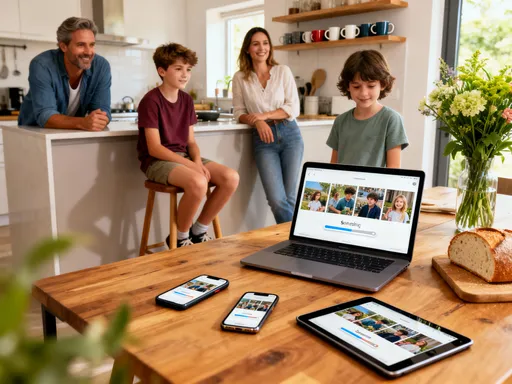
Last winter, during a snowstorm, we gathered around the tablet. “Let’s look at last summer’s trip,” I suggested. We opened the saved route, scrolled through the pins, and laughed at the photo of my husband pretending to milk the giant cow. My daughter leaned in. “I want to show this to my kids someday,” she said quietly.
That stopped me. I hadn’t thought that far ahead. But in that moment, I saw it clearly—these saved journeys weren’t just digital records. They were becoming a family archive. A legacy. Not of perfect trips, but of real ones. The messy ones. The joyful ones. The ones where we got lost and found something better.
We’ve now mapped 37 trips over four years. Each one tells a story. Each one holds a piece of who we are. And the best part? We can pass them on. My kids already know how to use the app. They add their own notes, their own photos. They’re not just inheriting memories—they’re learning how to make them.
What started as a fix for bad road trips became something much bigger. It became a way to preserve presence. To honor time. To show that love isn’t just in the big moments—it’s in the drive there, the wrong turn, the unplanned stop, the song everyone sings too loud. This tool didn’t just get us to our destinations. It helped us stay together along the way.
And that, I’ve learned, is the most important journey of all.