More than Comfort: How Smart Temperature Control Helps Me Communicate Better with My Partner
Living in the same home doesn’t always mean sharing the same comfort zone—especially when one of you is always cold and the other’s sweating. I used to think our temperature battles were just another quirky couple struggle, but when I started using smart temperature control on my own, something surprising happened: our communication improved. It wasn’t about the thermostat—it was about feeling heard, respected, and in control of my own space. That small shift didn’t just change how I felt in the house; it changed how I showed up in our relationship. And honestly, I didn’t see it coming.
The Hidden Tension in Everyday Comfort
Let’s be real—how often do we blame a bad mood on something deeper, when really, we’re just too hot or too cold? I didn’t realize how much physical discomfort was affecting my emotional state until I started paying attention. My partner and I have always loved each other deeply, but we’ve also always disagreed on the thermostat. I’d walk into the living room shivering, reach for the remote, and turn up the heat just a few degrees. Ten minutes later, I’d find him at the window, letting in a gust of winter air. Back and forth it went—no yelling, no drama, just a quiet tug-of-war that left both of us feeling a little unseen.
It wasn’t really about the temperature. It was about autonomy. When your comfort is constantly overridden, even in small ways, it starts to feel like your preferences don’t matter. I’d bite my tongue instead of speaking up, and over time, that built up into passive frustration. I’d snap over little things—dishes left in the sink, the TV volume—when really, I was just cold and tired of feeling like I had to ask permission to be comfortable. And he didn’t even know it. How could he? I wasn’t telling him. I thought I was being easygoing, but really, I was burying little pieces of myself to keep the peace.
What I’ve learned is that emotional connection begins with physical well-being. When your body is stressed—too hot, too cold, restless—it’s harder to be patient, to listen, to be present. We assume we should just ‘get over it,’ but our nervous systems don’t work that way. Discomfort is a signal, and when we ignore it, it finds other ways to make itself known. For me, it showed up as irritability, distance, and a quiet resentment that I didn’t even understand until I stepped back and asked: What if the problem isn’t us—it’s the room?
Discovering Solo Control in a Shared Space
The turning point came when I installed a smart thermostat in our home. At first, I thought it was just about convenience—being able to adjust the temperature from my phone, setting schedules so the house warmed up before I got home from errands. But what it actually gave me was something much more meaningful: the ability to take care of myself without asking for permission.
I started small. I set up a personalized zone in my home office, where I spend most afternoons working. I kept it cooler—around 68°F—because I focus better when I’m not overheated. My partner, who prefers warmth, didn’t have to adjust his habits. The rest of the house stayed at his preferred setting. For the first time, I didn’t have to negotiate. I didn’t have to explain why I needed it cooler. I just… had it. And that tiny act of self-trust changed everything.
What surprised me most was how it affected our relationship. My partner noticed I was calmer, less reactive. I wasn’t walking into the kitchen with my arms crossed, muttering about the ‘sauna’ we were living in. I was more available—emotionally, mentally. I had more patience for his stories, more energy for our evening walks, more presence in our conversations. He didn’t say it outright, but I could tell he felt it. The tension that used to hum beneath the surface of our days? It softened. We weren’t fighting over the thermostat anymore, and honestly, we weren’t fighting over much at all.
That’s when it hit me: technology didn’t fix our communication. It created the conditions for better communication to happen. When I wasn’t walking around in a state of low-grade discomfort, I wasn’t in survival mode. I could listen. I could care. I could show up as the partner I wanted to be, not the one worn down by invisible stress.
How Small Adjustments Lead to Big Emotional Shifts
There’s real science behind this. Studies show that thermal comfort affects everything from cognitive performance to emotional regulation. When your body is in a state of balance, your brain functions better. You’re less reactive, more resilient, more open to connection. On the flip side, when you’re too hot or too cold, your body enters a mild stress response—your heart rate goes up, your cortisol levels rise, and your ability to manage emotions takes a hit.
I decided to track how I felt over a few weeks—some days when I had full control of my environment, others when I didn’t. On the days I could set my own temperature, I was more focused, more patient, more joyful. I laughed more. I initiated conversations instead of retreating to my room. On the days when I had to ‘go along’ with the house setting, I was more withdrawn, more likely to snap over small things. The difference wasn’t subtle. It was measurable in my mood, my energy, even the quality of our interactions.
What I realized is that emotional availability starts with physical comfort. When I’m at ease in my body, I’m at ease in my relationship. I don’t have to armor up. I don’t have to protect my space. I can relax into the moment. And when both partners are in that state, something beautiful happens: the conversations go deeper. We stop managing each other and start understanding each other.
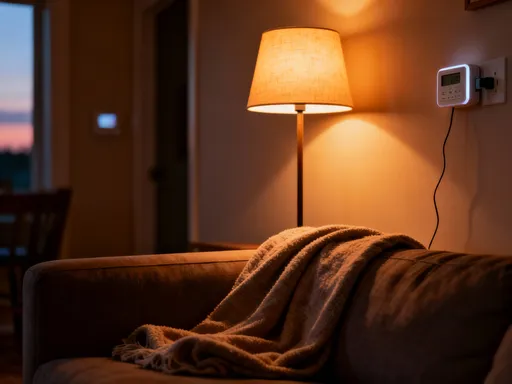
One night, after a long day, I curled up on the couch with a blanket—my usual move when I’m cold. But instead of feeling annoyed, my partner asked, ‘Do you want me to turn up the heat in here?’ Not because he wanted to, but because he noticed. That small moment of care—it meant everything. And it wouldn’t have happened if I hadn’t first learned to care for myself.
Bridging the Gap with Shared Insights, Not Settings
One of the most unexpected benefits of our smart system wasn’t control—it was insight. The app showed us patterns we never would have noticed otherwise. I saw that I consistently turned up the heat between 7 and 9 p.m.—exactly when I was winding down with a book. My partner discovered he preferred cooler mornings but warmer evenings. We started sharing these observations like little discoveries. ‘I didn’t know you got cold that early,’ he said. ‘I didn’t know you noticed,’ I replied.
Instead of arguing over settings, we started having conversations about needs. ‘Do you get cold when you’re trying to relax?’ I asked. ‘Yeah,’ he admitted. ‘It’s like my body slows down and I lose heat.’ That simple exchange did more for our relationship than any compromise over the thermostat ever did. We weren’t trying to change each other—we were learning each other.
The data didn’t replace communication—it invited it. It gave us a neutral starting point, free from blame. Instead of ‘You’re always turning up the heat!’ it became ‘I noticed you like it warmer at night—what’s that about?’ That shift—from accusation to curiosity—changed everything. We weren’t fighting over comfort. We were exploring it—together.
And here’s the thing: we still don’t agree on the perfect temperature. We probably never will. But we don’t need to. What matters is that we understand why we feel the way we do. That awareness builds empathy. And empathy builds connection.
Designing Personal Zones Without Building Walls
Some people worry that personal zones create distance—that if everyone has their own temperature, we’ll stop sharing space altogether. But in our home, it’s been the opposite. Knowing I have a space where I can be fully myself—cool, quiet, undisturbed—actually makes me more willing to spend time in our shared spaces. I’m not guarding my comfort like a secret. I’m relaxed enough to invite him into my world, and open enough to step into his.
We’ve designed our home with intention. His favorite armchair has a small radiant heater nearby—just enough to keep his feet warm in the winter. My desk has a compact fan that kicks on when the sun hits the window. These aren’t grand gestures. They’re small acts of care, made possible by technology. They say, ‘I see you. I know what you need. And I want you to be comfortable.’
And that changes the energy of the whole house. It’s not about winning the thermostat war. It’s about creating a home where both of us feel seen. When you feel respected in your preferences, you’re more likely to extend that respect to others. We’re not just coexisting—we’re thriving. Together.
Even our routines have shifted. On weekend mornings, I’ll make tea in the kitchen while he reads the paper in the living room. The house is set to his warmth preference, but I have my sweater and my mug. I don’t resent the heat because I know I can cool down in my office later. He doesn’t feel guilty for turning it up because he knows I’m not suffering. There’s space for both of us. And that space? It’s where love grows.
Practical Tips for Starting Your Own Solo Comfort Journey
You don’t need a full smart home system to begin. In fact, I’d say start small. Pick one room—your bedroom, your home office, even the corner where you read. Add one device: a smart thermostat, a plug for a space heater, a smart fan with app control. See how it feels to have that one pocket of control.
Pay attention to your body. When do you feel most alert? Most relaxed? Most irritable? Notice how temperature plays a role. You might find that you sleep better when it’s cooler, or that you focus more when there’s a gentle breeze. These aren’t luxuries—they’re clues to your well-being.
Then, talk to your partner. But don’t frame it as a problem they’re causing. Try saying, ‘I’ve been trying something new—using a smart fan in my office. It helps me focus, and I’ve been feeling calmer. Would you be open to trying something like that in your space too?’ Make it about self-care, not conflict. Invite them in, don’t push them away.
Use the data to spark connection, not criticism. Instead of ‘You left the heat on again,’ try ‘I noticed the bedroom was warm last night—were you cold? Do you sleep better that way?’ Let the technology open the door to empathy, not arguments.
And remember: the goal isn’t perfect temperature. It’s greater peace. It’s showing up as your best self. It’s creating a home where both of you can breathe.
The Quiet Revolution of Feeling at Home—Alone and Together
In the end, smart temperature control didn’t just regulate the climate—it helped regulate our relationship. It taught me that feeling comfortable in your own skin often starts with feeling comfortable in your space. When we honor our individual needs, we don’t pull away from each other. We come closer.
Because here’s the truth: love isn’t about giving up who you are. It’s about creating a life where both people can be fully themselves—and still choose each other, every day. Technology, at its best, doesn’t replace human connection. It makes space for it to grow. It removes the small frictions that wear us down and lets the good stuff shine through.
Now, when I walk into a room and feel just right—warm enough, cool enough, exactly as I need to be—I don’t take it for granted. I see it as an act of self-respect. And when I see my partner doing the same—wrapping himself in his favorite blanket, adjusting his chair to catch the sun—I smile. Because we’re not just sharing a house. We’re building a home. One degree at a time.